Salt deposits and plaster damage
White deposits and crumbling finishes can remain after moisture has affected a wall. They are clues to investigate, not proof of one particular damp diagnosis.

Damp in a Baldock property may show as salt-like deposits, bubbling paint, damaged plaster or mould on colder surfaces. Some signs are associated with moisture moving through masonry; others arise from rainwater defects, plumbing or condensation. Identifying which explanation best fits the building is the starting point for sensible remedial work.
Bishops Home Improvements can help you understand the symptoms and discuss practical options based on the condition of your property.
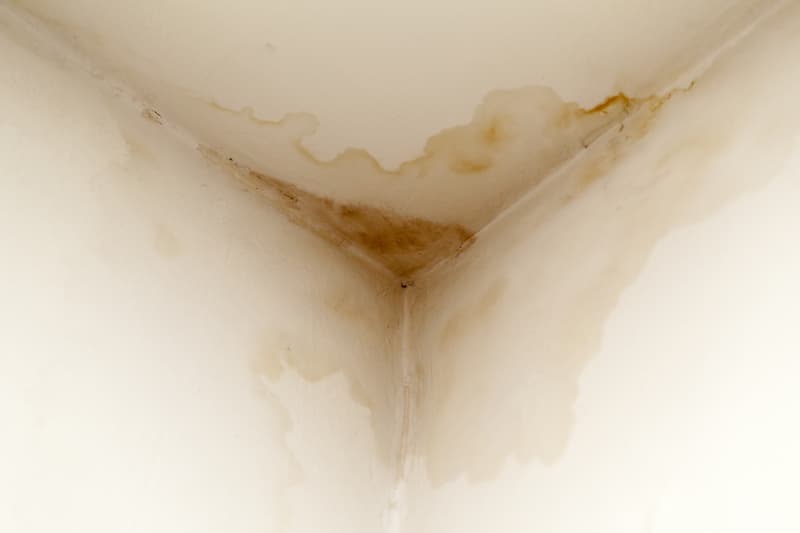
We consider the materials affected and the position of the damp, then look for possible routes of water entry. This can include external pointing and render, gutters and downpipes, roof details, plumbing and the level of the ground beside the wall. The findings help decide whether a repair, ventilation improvement or a damp-proofing measure is appropriate.
White deposits and crumbling finishes can remain after moisture has affected a wall. They are clues to investigate, not proof of one particular damp diagnosis.
Cracked render, open joints and failing seals around openings may let rainwater pass into the building. External inspection is important where marks appear on the corresponding inside wall.
Mould around window reveals or behind furniture can be linked to condensation and restricted air movement. The cause should be addressed before redecorating.
A good assessment looks beyond the damaged finish and considers the building as a whole.
We consider the materials affected and the position of the damp, then look for possible routes of water entry. This can include external pointing and render, gutters and downpipes, roof details, plumbing and the level of the ground beside the wall. The findings help decide whether a repair, ventilation improvement or a damp-proofing measure is appropriate. The right next step may be an external repair, a plumbing investigation, improved ventilation, plaster repairs after the source is resolved or a suitable damp-proofing treatment. Not every property needs the same work.
Rising damp, penetrating damp and condensation can produce overlapping symptoms, but they are not interchangeable diagnoses.
Moisture may move upwards through masonry where a damp-proof course is missing, bridged or ineffective. Low-level staining alone does not confirm this; the wall and surrounding conditions need to be assessed.
Rainwater may enter through defects in roofs, pointing, render, gutters, downpipes or openings. Finding and repairing the entry route is central to resolving the problem.
Moist air can settle on cold surfaces where airflow is limited. Ventilation, heating and moisture production should be considered before choosing a building treatment.
We focus on understanding the issue and explaining the available options.
Share where the marks appear, how long they have been present and whether they change with weather or room use.
We look at the affected area and relevant parts of the building to distinguish possible moisture causes.
We explain practical next steps based on the findings, including any repairs or moisture-control measures that may be appropriate.
We also cover Ashwell, Clothall, Weston and Bygrave. If you are nearby but do not see your location listed, contact us with your postcode to check coverage.
If you are concerned about damp staining, mould or damaged plaster, contact Bishops Home Improvements to discuss the symptoms and possible next steps.
Call 07301 800750The position and pattern of the moisture, the condition of the external walls and roof details, plumbing and ventilation all help identify possible causes. A visible patch alone is not enough to confirm a diagnosis.
Not necessarily. Plaster can be affected by several moisture sources and may remain damaged after a leak or external defect. The cause should be established before treatment is chosen.
Yes. Moist indoor air can condense on cold surfaces, particularly in rooms with limited ventilation. This needs a different response from rainwater entering through the building.
We cover Ashwell, Clothall, Weston and Bygrave. Contact us with your postcode if you would like us to confirm whether your property is within our service area.
Tell us about your home improvement project. We’ll be happy to discuss your requirements and provide a free, no-obligation quote.

Quality home improvement services for homes and businesses across Essex, Hertfordshire and London. Contact our team to discuss your project and request a free quote.
01992 842477
07301 800750
info@bishopshomeimprovements.com
Serving Essex, Hertfordshire & London
© 2026 Bishop’s Home Improvements. All rights reserved. | Sitemap | Website by Low Cost Web Designs