Blistered paint and salts
Decorative finishes may blister or show deposits after repeated moisture exposure. The wall needs to be understood before replastering or repainting, otherwise the damage may return.

Damp symptoms in Broxbourne can affect internal finishes in several ways, from blistering paint and damaged plaster to mould around windows. These signs can result from moisture entering through a building defect, a leak or condensation. Looking at the position of the damage and the condition of nearby building elements is more useful than choosing a treatment from the symptom alone.
For Broxbourne properties, the inspection considers where symptoms appear and checks the corresponding external wall, openings and rainwater details.
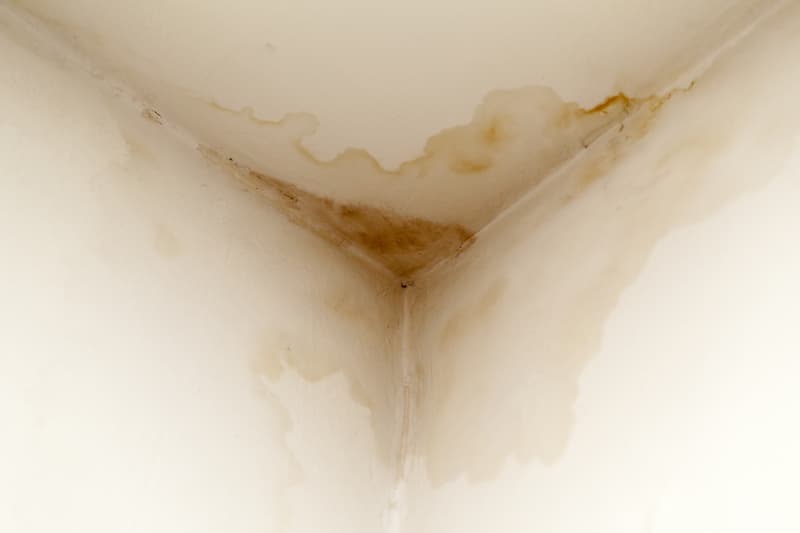
Our assessment considers the internal pattern alongside possible external sources, including pointing, render, gutters, downpipes and ground levels. We also consider plumbing and ventilation where the signs suggest these may be relevant. This cause-led approach helps avoid treating the wrong problem or renewing finishes before the moisture source has been addressed.
Decorative finishes may blister or show deposits after repeated moisture exposure. The wall needs to be understood before replastering or repainting, otherwise the damage may return.
Defective pointing, cracked render or poorly sealed junctions can allow rainwater through external walls. Repairs should target the actual entry route rather than simply covering the inside surface.
Mould on reveals or adjacent corners can be associated with cold surfaces and condensation. Ventilation and room conditions should be considered alongside any possible external defect.
The location and spread of the damage help guide the investigation. At a Broxbourne property, we consider the internal finish alongside the corresponding external wall, window junctions, rainwater goods and any plumbing or ventilation concerns.
The conclusion should explain how the evidence fits together, rather than treating a single symptom as proof of one particular damp problem. We also consider plumbing and ventilation where the signs suggest these may be relevant. This cause-led approach helps avoid treating the wrong problem or renewing finishes before the moisture source has been addressed. For a Broxbourne property, the findings may point to an external repair, plumbing work, better ventilation or renewal of affected plaster after the moisture source has been dealt with.
Similar-looking symptoms can have different causes, so treatment should be based on the evidence at the property.
At a Broxbourne property, low-level damp should be checked against the existing course, floor construction and external ground. Raised paving, bridged finishes or a leaking service can create similar marks, so diagnosis comes before any new treatment.
Water may enter through defective pointing, cracked render, window junctions, roof edges or leaking downpipes. In Broxbourne, inspect the outside area that corresponds with the internal stain so the repair addresses the route of entry.
Moisture from cooking, bathing and laundry can build up where ventilation is poor. Cold corners, window reveals and areas behind furniture in a Broxbourne home should be checked for condensation before specifying structural work.
For a Broxbourne property, the work begins with understanding the signs and checking the relevant parts of the building before choosing a repair.
Tell us which room or wall is affected, how long the symptoms have been present and whether they follow rainfall, cold weather or use of a kitchen or bathroom.
Check the internal damage against the matching external wall, including pointing, render, window seals, gutters and ground levels. Plumbing and ventilation should also be considered where relevant.
Explain the likely source and the options that address it, including any further checks or drying period. Provide a clear quote for the proposed work before proceeding.
We also cover Hoddesdon, Wormley, Cheshunt and Nazeing. If you are nearby and would like to check whether we cover your postcode, please get in touch.
Contact Bishops Home Improvements if you have noticed damp staining, mould or damaged plaster and would like to discuss the next step.
Call 07301 800750Yes. A Broxbourne property may have a leak or rainwater defect as well as condensation in a colder room. The signs should be considered separately so one issue is not mistaken for the cause of all the damage.
Resolve the moisture source before arranging new plaster or decoration. In Broxbourne, a fresh finish applied over a continuing leak or salt-affected wall may deteriorate again.
No. Low-level damp in Broxbourne can be linked to raised ground, bridging, plumbing faults or water entering from outside. The damp-proof course and surrounding building details should be checked before choosing a treatment.
We cover Hoddesdon, Wormley, Cheshunt and Nazeing. Contact us with your postcode if you would like us to confirm local coverage.
Tell us about your home improvement project. We’ll be happy to discuss your requirements and provide a free, no-obligation quote.

Quality home improvement services for homes and businesses across Essex, Hertfordshire and London. Contact our team to discuss your project and request a free quote.
01992 842477
07301 800750
info@bishopshomeimprovements.com
Serving Essex, Hertfordshire & London
© 2026 Bishop’s Home Improvements. All rights reserved. | Sitemap | Website by Low Cost Web Designs